
Article
Article

2026 Local SEO Checklist [With a FREE Downloadable Template!]

This checklist walks you through the must-do steps to rank higher in your area, from optimizing your Google Business Profile and managing reviews, to building local backlinks, creating location pages, and even preparing your site for AI with LLMS.txt.
Quick Summary

Local SEO is more essential than ever in 2026. With nearly half of all Google searches having local intent and AI-driven search evolving fast, showing up in local results can make or break your visibility. This checklist walks you through the must-do steps to rank higher in your area, from optimizing your Google Business Profile and managing reviews, to building local backlinks, creating location pages, and even preparing your site for AI with LLMS.txt.

Looking to attract more local customers to your business this year? You need a solid Local SEO strategy.

Local Search Engine Optimization (SEO) is how businesses show up in search results when potential customers nearby are looking for products or services like yours. Think of searches like:

  • “best chiropractors near me”
  • “Hair salons in [city]”
  • “local coffee shop” 

If you’re not appearing in those results, you’re missing out on ready-to-buy customers. But don’t worry — this guide goes through everything you need to get up the ranks. 

👉 Download our FREE Interactive Local SEO Checklist for 2026 to follow along and track your progress.

What is Local SEO? 

Local SEO is the process of improving your online presence so your business shows up in local search results.

These results are shown when someone searches with local intent, such as "accounting services in Philadelphia." This also works for keywords that include “near me” (e.g., “accounting services near me”). 

Good Local SEO makes it easier for nearby customers to find you, trust you, and visit or contact you.

Why Local SEO Still Matters in 2026

Search engines like Google are smarter than ever — and local intent matters more than ever. 

In fact:

  • 46% of all Google searches are looking for local information (HubSpot)
  • Four in five people use search engines for local search (Think with Google)
  • The "map pack" (those top 3 local results under the map) gets the most clicks — and those are all driven by Local SEO!
  • 63.6% of consumers are likely to check Google Reviews before visiting a physical business (RankTrackers)

Local SEO Checklist

1. Get on Google Business Profile

Your Google Business Profile is arguably the most important asset for Local SEO. This is what shows up in the Google Maps section and the map pack - the listings under the map that get the majority of local clicks. 

If you haven’t yet, add or claim your business on Google Business Profile. New accounts must go through their verification process. Once that’s done, it’s time to fill out and optimize your GBP with accurate business information. This includes: 

  • NAP (Name, Address, Phone)
  • Hours of Operation 
  • Website 
  • Business Description 
  • Photos
  • And more! 

Already have one? Great! Still give it a review to ensure all business information and photos are up-to-date. Make it a task to consistently check and respond to Google Reviews. If anyone submitted questions, they should be answered! 
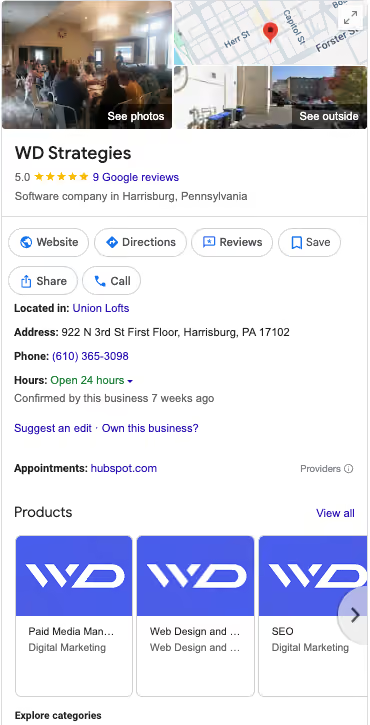
WD Strategies Google Business Profile for SEO
Local Marketing Agency's Google Business Profile

2. Collect and Manage Customer Reviews

Reviews are powerful for both rankings and reputation.

Google considers reviews a ranking factor, but more importantly, your customers trust reviews more than ads. 63.6% of consumers are likely to check Google Reviews before visiting a physical business (RankTrackers).

Google Reviews might be the go-to for most, however there are still a variety of online review sites that users will check. Platforms like Yelp, Facebook, TripAdvisor, and more industry-specific sites also hold weight. 

Use this checklist to help manage and update your reviews: 

  1. Review existing review platforms your business is on and update where necessary 
  2. Add your business to relevant review websites 
  3. Request reviews from past customers on primary review platform
  4. Create a plan for how you’ll respond to reviews, both positive and negative

No matter how many review websites your business uses, it’s always important to have a primary and secondary platform. These are your go-to listings that have the most information and reviews. 
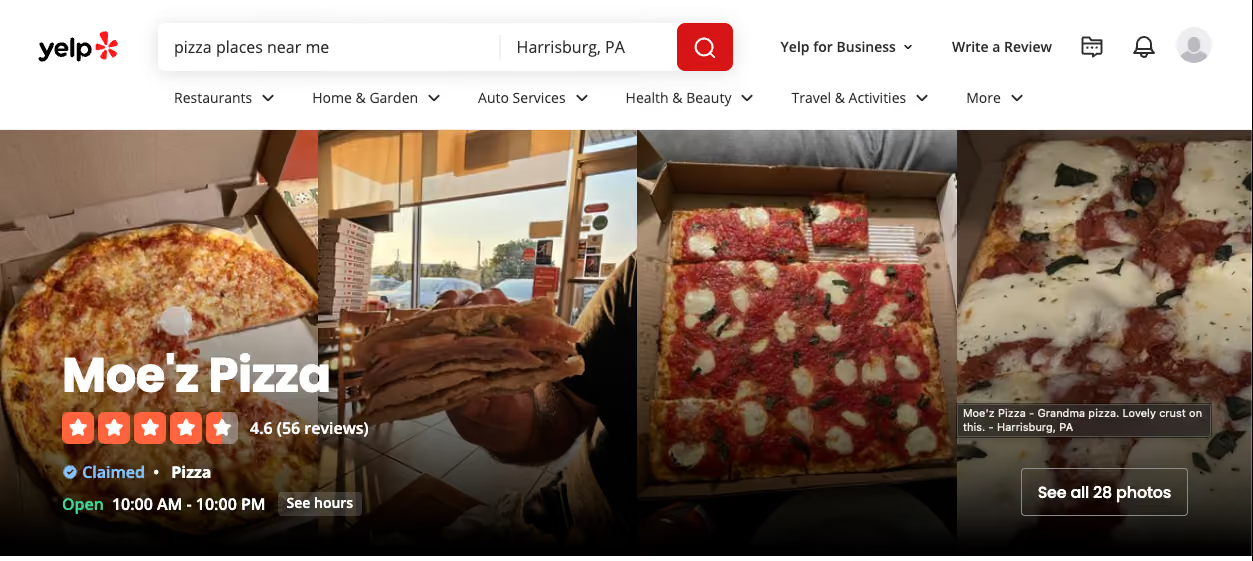
Yelp Review Page of a Local Restaurant in Harrisburg
Yelp Review Page of a Local Restuarant

3. Explore Local Backlink Opportunities 

Local backlinks are links from other websites in your geographic area. They build authority and local relevance. 

Google sees backlinks from other local sources as signals that your business is trusted in your community.

Ways to build local authority: 

  1. Join your local Chamber of Commerce or industry associations
  2. Sponsor local events or charities
  3. Collaborate with local bloggers, media, or influencers
  4. Submit press releases to local newspapers or TV stations
  5. List your business on local directories (BBB, Yellow Pages, MapQuest, etc.)

Focus on quality over quantity — backlinks from respected local sources are more valuable than random low-quality ones.

4. Improve On-Page SEO 

Your website should clearly tell Google what you do and where you do it.

Without location-specific content and keywords, Google can’t connect your site to local searches.

Use this On-Page SEO Checklist: 

  1. Use tools like Google Keyword Planner or SEMrush to find local terms (e.g., “wedding planner in Columbus”)
  2. Place local keywords in: Page titles, Meta descriptions, Headings (H1, H2), Paragraph text, Image alt tags 
  3. Include your city, neighborhood, or service area on your website 
  4. Add structured data (Local Business Schema) to your homepage

5. Make Sure Your NAP Is Everywhere — and Consistent

Your NAP is your business’s Name, Address, and Phone Number. Google checks that your contact info is consistent across your website, Google listing, and directories. Inconsistencies can hurt trust and rankings.

You should ensure your NAP is on your website and consistent everywhere including: 

  • Your website 
  • Google Business Profile 
  • Business directories
  • Local Listing Sites 

Should you come across a listing with incorrect NAP details, either edit the profile directly or reach out to the website to request an update. 

Use listing management tools like SEMRush or Moz Local to track all the listings you have and check for inconsistencies across the web. 

6. Create Location Pages (If Serving Multiple Areas)

If you serve more than city or region, creating a unique location-specific page is a must! 

Having just one "Areas We Serve" page isn’t enough anymore. Google and your potential customers want specifics. This kind of hyper-local content helps build trust, improves conversions, and signals to search engines that you’re a relevant result for people in that exact area.
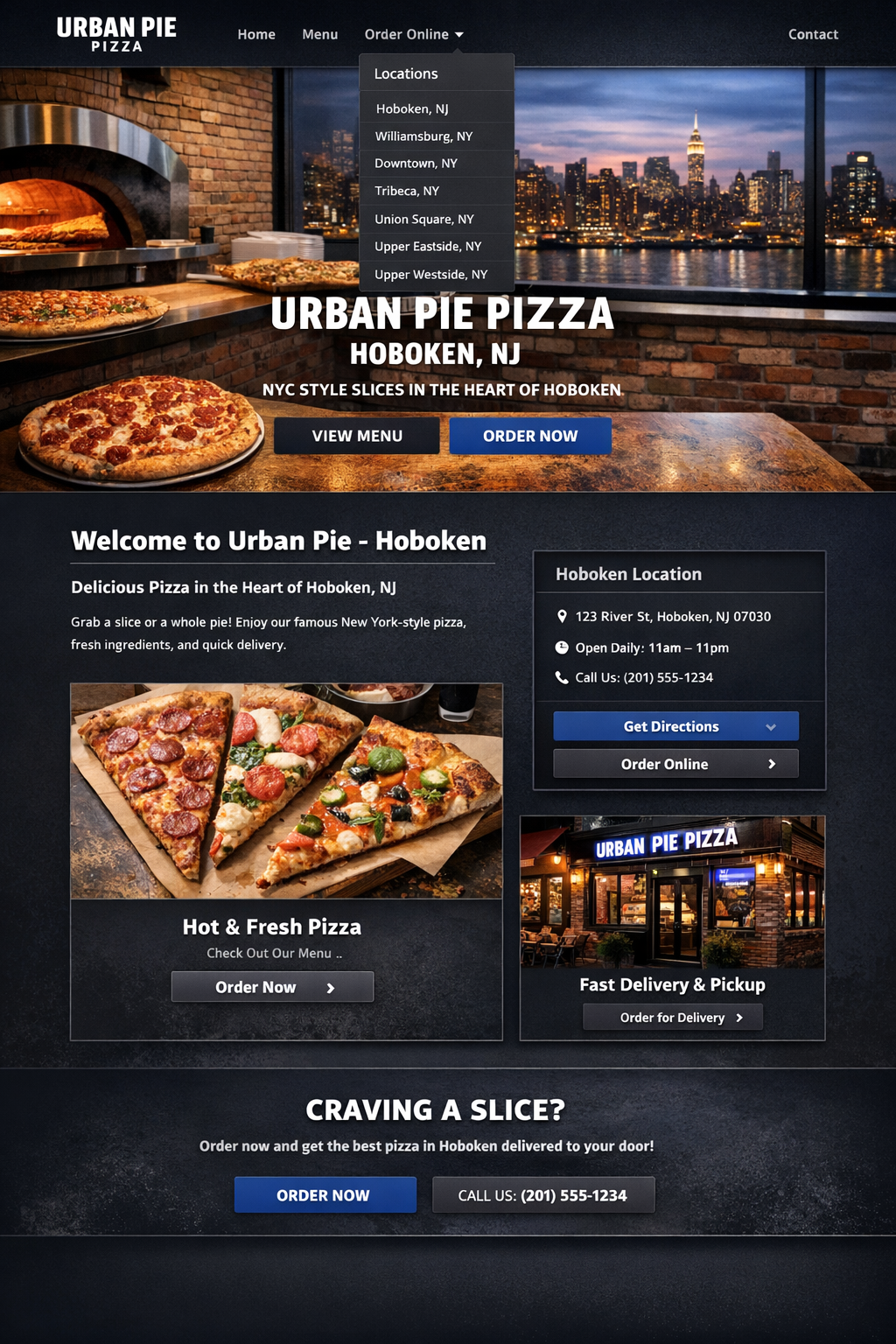
A Pizza Shop's Website with Multiple Locations

Follow this checklist to ensure your location pages are optimized to improve SEO performance: 
  1. Perform local keyword research 
  2. Ensure each page has unique content to avoid duplicate content issues 
    • Add location keyword in headings & throughout copy
    • Add NAP Information (if address is different) & service details 
    • Include local imagery 
  3. Optimize title tags, meta descriptions, header tags, & URL slugs on each location page based on target keyword 
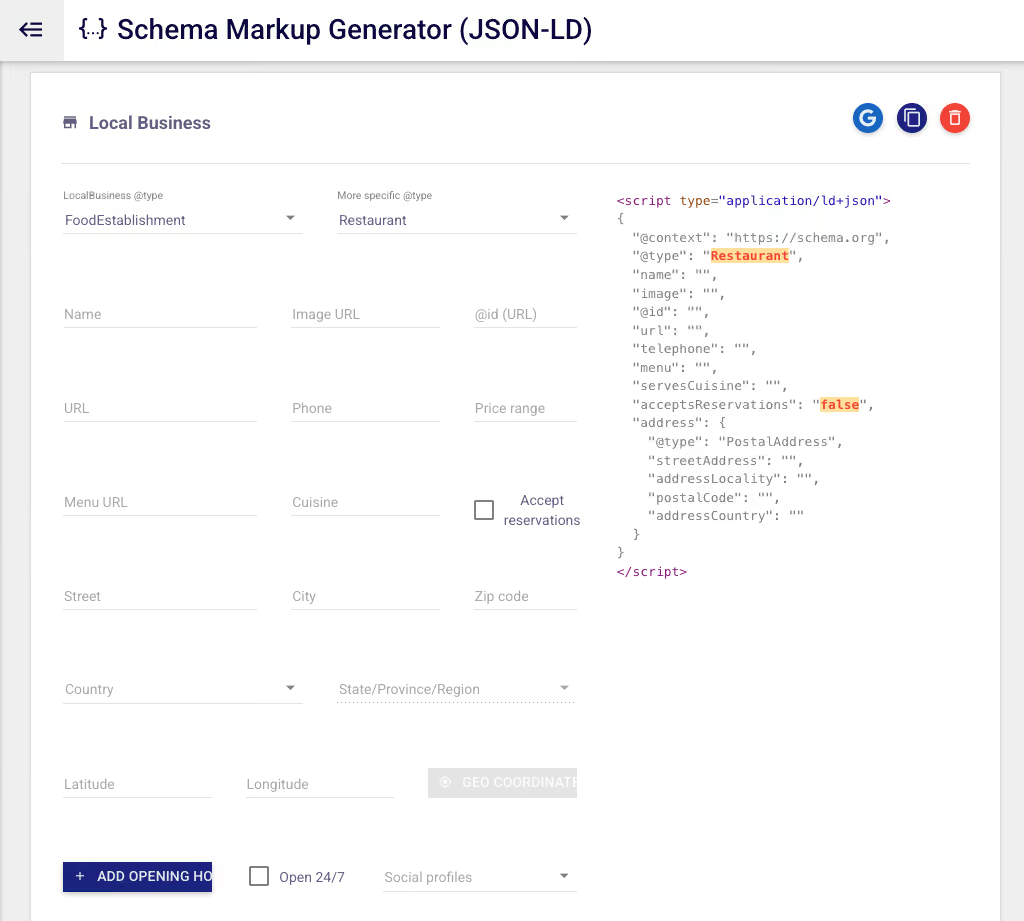
  4. Add Local Business Structured Data to your website using a Schema Markup Generator

Local Business Schema Markup Generator for Restuarant
Local Business Schema Markup Generator for Local Restuarant

7. Add an LLMS.txt File 

As AI-powered search tools like Google’s AI Overviews and ChatGPT become part of everyday search behavior, Generative Engine Optimization (GEO) is increasingly important for local businesses aiming to stay visible in these new discovery surfaces.

One best practice in GEO is the implementation of a llms.txt file.

Just like sitemaps.xml and robots.txt communicate with search engines, llms.txt communicates with AI crawlers and language model systems(LLMs). 

This file allows you to tell AI which pages to prioritize, point AI to your preferred canonical URLs, and improve the accuracy of how your business is represented. This is a place where you can include information about the location(s) of your business. 

Although this is still relatively new, a select few website builders have this feature including: 

Here is a Mock Example of a Pizza Shop with multiple locations in New York and New Jersey:

# Urban Pie Pizza 

> This file helps language models understand the structure, purpose, and key pages of our website and local business locations.

Our mission is to serve New York and New Jersey’s best pizza through locally-loved shops in vibrant neighborhoods.

## Core Pages

- [Homepage](https://www.urbanpiepizza.com)
- [Menu](https://www.urbanpiepizza.com/menu): Full pizza menu, sides, and beverages.
- [About Us](https://www.urbanpiepizza.com/about): Learn about Urban Pie’s history and mission.
- [Contact](https://www.urbanpiepizza.com/contact): Contact details and inquiries.
- [Order Online](https://www.urbanpiepizza.com/order): Place pickup or delivery orders.
- [Blog](https://www.urbanpiepizza.com/blog): Tips, updates, and pizza stories.

## Location Pages

- [Hoboken, NJ](https://www.urbanpiepizza.com/locations/hoboken-nj): Serving the Hoboken waterfront and downtown area.
- [Williamsburg, NY](https://www.urbanpiepizza.com/locations/williamsburg-ny): Located in the heart of Brooklyn's arts district.
- [Downtown Manhattan, NY](https://www.urbanpiepizza.com/locations/downtown-nyc): Quick slices and lunch specials near Wall Street.
- [Tribeca, NY](https://www.urbanpiepizza.com/locations/tribeca-nyc): Family-friendly spot near Hudson River Park.
- [Union Square, NY](https://www.urbanpiepizza.com/locations/union-square-nyc): Popular with students and office crowds.
- [Upper East Side, NY](https://www.urbanpiepizza.com/locations/upper-east-side-nyc): Classic New York pies in a cozy atmosphere.
- [Upper West Side, NY](https://www.urbanpiepizza.com/locations/upper-west-side-nyc): Great for pre-theater dinners and weekend brunch.

## Recommended Content

- [Local Pizza Guide](https://www.urbanpiepizza.com/blog/local-pizza-guide): Explore what makes NYC pizza unique.
- [Our Sustainability Promise](https://www.urbanpiepizza.com/about#sustainability): Our comm

For formatting guidance or examples, visit the official llms.txt website 

8. Track Local SEO Performance 

Once your local SEO efforts are in motion, the next step is understanding what’s actually working. The data will tell you where to focus, what to improve, and what’s already paying off. 

Use this checklist to start monitoring your results: 

  1. Decide which metrics you’ll monitor on each platform
    • Google Business Profile (calls, directions, clicks)
    • Google Search Console (impressions, clicks, click-through rate, average position)
    • Google Analytics (traffic by location, events)
  2. Monitor local keyword rankings using tools like SEMRush, Google Keyword Planner, or Ahrefs 
  3. Monitor Insights on your brand visibility's on AI search engines with tools like SEMRush. If your website is on Wix, they have their own AI Insights section.

Keep in mind that SEO efforts take time to show results. If you’re not ranking after a month, don't get discouraged - it could take up to 3-6 months to see improvements. 

Use Our Interactive Local SEO Checklist for More! 

To track your progress and gain more helpful tips, use our free interactive checklist! 

Get Started

So, how can we help you?