How WD Strategies combined marketplace strategy, WordPress infrastructure, WooCommerce, Pressable hosting, and partner-led execution to help an emerging food commerce platform move from concept to scalable business model

A growing brand in the baked goods space came to WD Strategies with a vision that extended far beyond a standard website.
The client did not simply want to sell products online. They wanted to build the foundation for a new marketplace ecosystem: a digital platform where independent baked goods vendors could participate, customers could discover and purchase from them, and the business owner could orchestrate value across both sides of the network.
In practical terms, the project required website design, WordPress development, WooCommerce configuration, vendor onboarding, payment infrastructure, customer communication, accounting alignment, marketing automation, CRM visibility, and long-term support.
Strategically, the project required something deeper.
It required a clear understanding of how two-sided marketplaces grow, why they fail, how network effects emerge, and how platform operators can reduce the cost of acquiring each new participant by intentionally designing incentives that cause customers and vendors to recruit, retain, and activate one another.
As an Automattic Affiliate, we earn from qualifying purchases made through links in this post at no additional cost to you.
WD Strategies partnered with the client to achieve several strategic objectives:
A traditional e-commerce project is primarily concerned with helping one business sell its own products online.
A marketplace project is different.
In a marketplace, the platform owner does not only need buyers. The platform owner also needs sellers, creators, vendors, service providers, or some other supply-side participant. The value of the platform increases as both sides grow, but neither side is naturally motivated to join until the other side is already present.
This is the classic marketplace dilemma.
Customers do not want to visit an empty marketplace.
Vendors do not want to invest time in a marketplace without customers.
The platform owner must therefore solve a sequencing problem, an incentive problem, a trust problem, and an operational problem at the same time.
That is why WD approached this project as a business model design engagement as much as a technical implementation engagement.
The client’s long-term opportunity was not merely to process transactions. It was to become the trusted digital layer connecting local or specialty baked goods vendors with customers who wanted convenience, discovery, quality, gifting, subscriptions, and community.
The work required asking questions such as:
Which side of the marketplace should be activated first?
What minimum level of supply is needed before customer acquisition becomes efficient?
What incentives will motivate vendors to create listings, share their pages, request reviews, and promote the platform?
What incentives will motivate customers to leave reviews, refer friends, return for repeat purchases, and explore other vendors?
How can the platform owner reduce paid acquisition dependency over time?
How can the platform turn individual vendor audiences into a shared demand engine?
How can each new vendor make the marketplace more valuable to customers, and each new customer make the marketplace more valuable to vendors?
Those questions shaped the technical architecture.
They also shaped the strategic roadmap.
Andrew Chen’s concept of the “cold start problem” is especially relevant to early-stage marketplaces. A network is not valuable merely because it exists. It becomes valuable when enough participants are active, engaged, and meaningfully connected to one another.
At launch, however, a marketplace has no network effect.
It has only potential.
The early challenge is to create enough density, utility, and trust that users begin to experience the platform as valuable even before it has reached scale.
For a baked goods marketplace, this means the platform must avoid launching as a generic directory with too few vendors and too little customer activity. It must instead create an experience where early participants see immediate value.
For customers, that may mean curated collections, easy product discovery, gifting options, subscriptions, seasonal drops, customer reviews, and trustworthy checkout.
For vendors, that may mean simple onboarding, a professional storefront, access to new customers, review generation, marketing support, recurring order opportunities, and clear operational workflows.
For the business owner, that means the platform must not depend on manual coordination forever. The marketplace needs systems that can scale: vendor registration, payments, customer communication, email automation, CRM tracking, financial reporting, and support documentation.
WD’s role was to design for that transition from manual launch to scalable network.
Reid Hoffman’s writing on blitzscaling is also useful when thinking about marketplace development.
While not every business should blitzscale in the venture-backed sense, the underlying insight applies: when speed and network effects matter, the operator must often build for rapid learning rather than perfect certainty.
A marketplace business cannot wait until every edge case has been solved before testing demand.
It needs to launch a strong enough version of the platform to begin learning from real customers and vendors. It needs to identify which interactions drive activation, which incentives create sharing, which products generate repeat behavior, and which vendor segments are most likely to succeed.
That does not mean cutting corners.
It means architecting the platform in phases.
WD’s approach was built around phased execution: establish the WordPress foundation, build the initial platform experience, introduce marketplace commerce, support vendor participation, and leave room for future expansion.
This is an important distinction.
A poorly planned phased build creates technical debt.
A strategically planned phased build creates learning velocity.
WD’s goal was to create a system that could support the client’s immediate needs while preserving the ability to expand into more advanced marketplace features over time.
Many marketplace projects fail because the strategy is reduced to a simple equation: add vendors, acquire customers, process transactions.
That is not enough.
A strong marketplace requires several reinforcing systems.
First, the platform must create liquidity. Customers need to find what they want, when they want it, at a quality level they trust. Vendors need enough customer activity to justify continued participation.
Second, the platform must reduce friction. Every step from vendor registration to product listing to checkout to fulfillment must be easy enough that participants do not abandon the process.
Third, the platform must generate trust. Customers need reviews, secure payments, clear product information, reliable communication, and consistent policies. Vendors need confidence that the platform will represent them well, handle payments correctly, and support their success.
Fourth, the platform must create repeat behavior. One-time transactions rarely justify the cost of building a marketplace. The business model becomes more compelling when customers return, subscribe, refer, review, and buy across multiple vendors.
Fifth, the platform must create cross-side incentives. Customers should help vendors succeed, and vendors should help bring customers into the platform. The operator’s job is to make these behaviors easy, visible, and rewarding.
This is where WD’s strategy and technical execution intersect.
We are not simply adding features because they are available.
We are designing platform mechanics that make the business model stronger.
WD’s approach to this project can be understood through a six-part marketplace strategy framework.
The supply side of this marketplace consists of baked goods vendors, makers, or participating sellers.
The first strategic priority is to make participation easy and valuable for them.
That means the platform must give vendors a clear reason to join before the marketplace has reached full scale. Early vendors need to understand not only how to list their products, but why the platform can help them grow.
WD’s platform design supports this through vendor profiles, product listings, onboarding content, support resources, payment workflows, and future membership or subscription structures.
The vendor experience should answer several questions immediately:
How do I join?
What can I sell?
How do I get paid?
How do customers find me?
How do I earn reviews?
How do I promote my storefront?
How do I understand my performance?
How do I get help?
A strong supply-side experience is essential because vendors are not only sellers. In an early marketplace, they are also distribution partners.
Every vendor has the potential to bring an existing audience into the platform.
That makes vendor activation a growth strategy, not just an administrative workflow.
The demand side consists of customers.
Customers need a reason to visit, browse, purchase, and return.
For a baked goods marketplace, demand-side activation can be driven through several value propositions: convenience, discovery, local identity, gifting, recurring treats, seasonal products, event-based ordering, and the emotional appeal of supporting independent food businesses.
WD’s technical architecture supports this through WooCommerce, customer accounts, payment functionality, automated email communication, SEO, product discovery, and future retention mechanisms such as subscriptions and memberships.
The customer experience should make the marketplace feel useful even when the network is still growing.
This can be accomplished through curated product collections, featured vendors, seasonal campaigns, product categories, reviews, email journeys, and loyalty-style interactions.
The goal is not simply to get a customer to complete one checkout.
The goal is to turn the customer into a recurring participant in the network.
Trust is one of the most important forms of marketplace infrastructure.
Customers must trust the platform before they purchase from a vendor they may not already know. Vendors must trust the platform before they invest time in building their presence.
Trust is created through design, content, policy, payment reliability, reviews, communication, and consistency.
In this project, trust architecture can manifest in several ways:
Verified vendor profiles
Clear product information
Customer reviews
Secure WooCommerce checkout
Reliable payment processing
Transparent shipping or pickup details
Professional design
Helpful onboarding content
Responsive support
Clear marketplace rules
Pressable hosting also contributes to trust at the infrastructure level. A slow, unreliable, or poorly maintained website weakens user confidence. A fast, stable, professionally hosted WordPress environment gives the marketplace a stronger foundation.
Trust is not a soft feature.
It is a conversion requirement.
A marketplace grows faster when its users are encouraged to perform actions that make the network more valuable.
For this project, WD identified several behaviors that can be incentivized over time:
Customers leaving reviews
Customers sharing vendor pages
Customers referring friends
Customers creating accounts
Customers making repeat purchases
Customers subscribing to recurring products or memberships
Vendors completing their profiles
Vendors adding high-quality photos
Vendors requesting reviews
Vendors sharing their storefronts
Vendors responding quickly to orders or inquiries
Vendors promoting seasonal campaigns
These actions should not be treated as isolated features. They should be designed as part of a marketplace growth loop.
For example, a customer leaves a review. That review increases trust for future customers. Higher trust improves vendor conversion. Better vendor conversion makes the platform more attractive to other vendors. More vendors create more supply. More supply creates more customer choice. More customer activity creates more reviews.
This is the beginning of a network effect.
Gamification can help make these behaviors visible and rewarding.
Customers might earn badges, discounts, early access, loyalty points, or recognition for leaving reviews, sharing product pages, referring friends, or supporting multiple vendors.
Vendors might receive profile completion scores, featured placement opportunities, seller badges, review milestones, storefront performance insights, or promotional boosts for positive platform behavior.
The strategic purpose is not novelty.
The purpose is to lower the cost per new user by turning existing users into acquisition channels.
Every review, share, referral, and vendor promotion can reduce the amount the business owner must spend on paid advertising to generate the next customer or vendor.
A marketplace is not just what users see on the front end.
It is also the operating system behind the business.
This project required thinking through the systems that allow the platform owner to manage customer relationships, vendor relationships, financial workflows, marketing campaigns, support needs, and performance data.
That is why WD’s partner ecosystem matters.
WooCommerce powers the transaction layer.
Pressable hosts the WordPress and WooCommerce environment.
QuickBooks supports financial operations and accounting visibility.
Mailchimp supports lifecycle marketing, customer segmentation, abandoned cart messaging, and re-engagement.
HubSpot supports relationship management, lead tracking, sales visibility, and structured follow-up.
Each tool plays a distinct role in the marketplace operating model.
Together, they help the business owner avoid managing growth through spreadsheets, disconnected inboxes, and manual follow-up.
The platform becomes more than a website.
It becomes a coordinated business system.
Finally, WD’s framework emphasizes learning velocity.
Marketplace operators should not assume that every strategic hypothesis will be correct on day one.
They need a platform that allows them to test, measure, and adapt.
Which vendor categories perform best?
Which products create repeat purchases?
Which email sequences drive return visits?
Which vendor incentives produce more sharing?
Which customer segments have the highest lifetime value?
Which acquisition channels produce profitable users?
Which product pages convert?
Which support questions indicate UX friction?
A phased build allows the business to launch, learn, and expand.
This is why WD’s role does not end at launch. Ongoing support, SEO, analytics, technical maintenance, content, email optimization, and feature iteration are core to the success of the platform.
A marketplace is not finished when it goes live.
That is when the real learning begins.
The strategy behind the project directly informed the technical scope.
WD did not recommend WordPress and WooCommerce simply because they are popular. We recommended them because they create a flexible foundation for the business model.
A marketplace ecosystem needs to support different user types, different transaction types, different access levels, and different growth strategies. WordPress and WooCommerce allow the platform to evolve while preserving ownership and flexibility for the client.
The project’s phased structure reflected the marketplace maturity curve.
The first phase established the digital foundation. This included the WordPress environment, design system, core pages, accessibility considerations, analytics, SEO readiness, and support infrastructure.
The second phase introduced marketplace commerce. This included WooCommerce configuration, vendor-related workflows, payments, product listings, customer accounts, automated emails, and the infrastructure needed to facilitate transactions between buyers and sellers.
Future phases and enhancements could support additional marketplace mechanics such as memberships, subscriptions, job postings, affiliate relationships, gamification, advanced vendor dashboards, and deeper CRM or accounting integrations.
Every phase was designed to move the client closer to marketplace liquidity.
WooCommerce provided the commerce foundation because it could support both immediate and future business needs.
For this type of platform, the transaction layer must be flexible enough to handle multiple possible revenue models.
The client may want to generate revenue through product sales, vendor subscriptions, membership access, transaction fees, featured listings, gift cards, recurring purchases, or other marketplace participation models.
WooCommerce supports that strategic flexibility.
WooCommerce Payments can support secure transactions.
WooCommerce Subscriptions can support recurring revenue.
WooCommerce Memberships can support gated access, vendor plans, or customer loyalty structures.
WooCommerce extensions can help support more advanced workflows around product configuration, vendor participation, auctions, add-ons, and other marketplace-specific needs.
For WD, the value of WooCommerce is that it allows business model design and technical implementation to move together.
The strategy does not have to be limited by the platform.
Pressable is an important part of the architecture because hosting becomes more critical as marketplace complexity increases.
A marketplace platform must be available when customers are ready to buy and vendors are ready to manage their listings. It must support WordPress and WooCommerce performance requirements. It must be maintainable, secure, and scalable enough to handle future growth.
For WD, Pressable represents the kind of hosting partner that aligns with serious WordPress commerce work.
When the client’s business depends on the platform, hosting is not a commodity decision.
It is a strategic infrastructure decision.
Pressable helps give the marketplace a professional foundation, allowing WD to focus on platform design, WooCommerce configuration, integrations, user experience, and growth strategy rather than fighting avoidable hosting limitations.
Email is one of the most important growth channels for an emerging marketplace.
Paid advertising can help create initial awareness, but marketplace economics improve when the platform can bring users back without paying for every return visit.
Mailchimp supports that objective.
For this project, WD moved the strategy away from the originally considered email platform and aligned the client around Mailchimp as the preferred partner for customer communication and lifecycle marketing.
Mailchimp can support:
Vendor onboarding sequences
Customer welcome journeys
Abandoned cart recovery
Product announcements
Seasonal campaigns
Review requests
Re-engagement campaigns
Segmented customer communications
Vendor education
Marketplace updates
This matters because the platform’s growth depends on repeated interactions.
A customer who buys once is valuable.
A customer who returns monthly, leaves reviews, shares vendors, subscribes, and refers others is strategically transformative.
Mailchimp helps create the communication layer that moves customers from one-time transactions to ongoing participation.
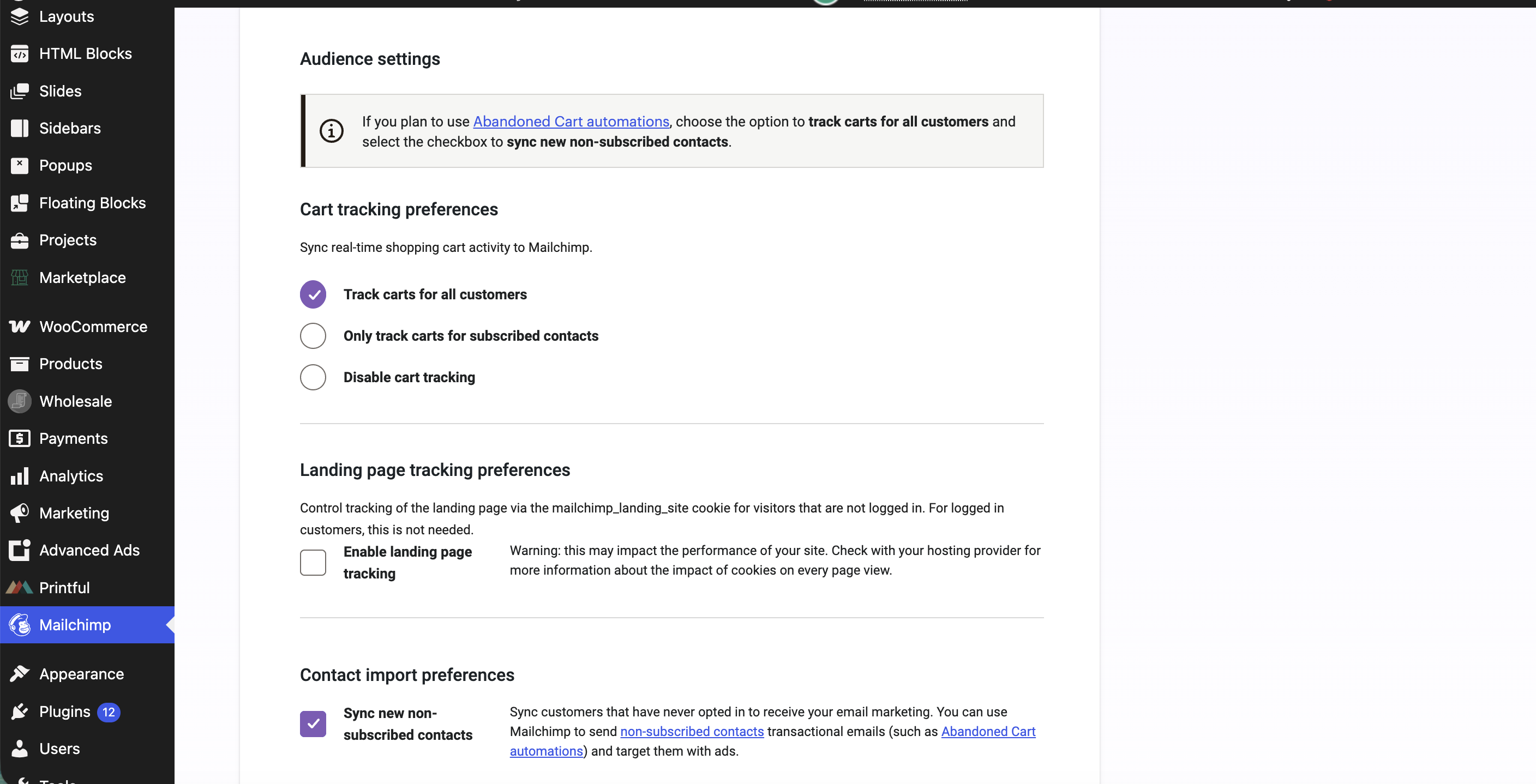
The integration layer between Mailchimp and WooCommerce is facilitated by Mailchimp's plug-in. It allows for the easy flow of data, such as who's abandoned their cart, to Mailchimp for additional nurture sequences.
Marketplace businesses can become financially complex quickly.
The platform owner may need to understand gross merchandise volume, net revenue, vendor payouts, payment processing fees, subscriptions, refunds, gift cards, taxes, and recurring revenue.
QuickBooks helps create the accounting foundation for that complexity.
For WD, this is an important part of building responsibly. A marketplace that generates sales but lacks financial clarity can become difficult to manage as it grows.
By thinking about QuickBooks early, WD helps the client prepare for operational scale, cleaner reporting, and better decision-making.
Financial workflows should not be treated as an afterthought once transactions begin.
They should be part of the platform design.
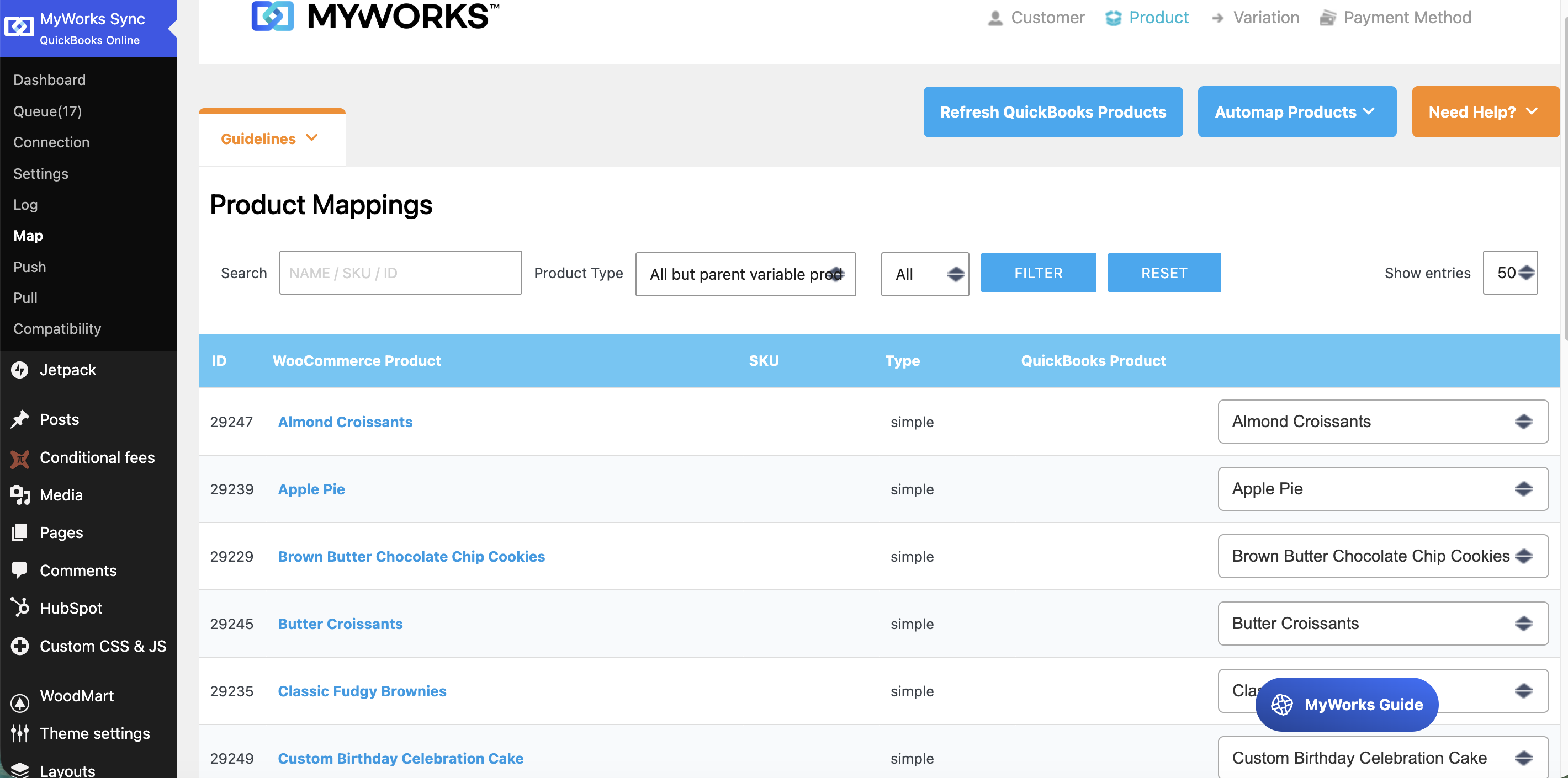
A proper QuickBooks implementation involves making sure customers, products, and order data are mapped between the e-commerce site and the accounting system. Our team utilizes middleware solutions like MyWorks to connect these systems:
In situations where more complex financial models are used, WD also works with Zapier to create more custom connections and workflows between thse two tools.
HubSpot adds value where the marketplace needs structured relationship management.
In a two-sided marketplace, the platform owner may need to manage vendor prospects, approved vendors, inactive vendors, high-performing sellers, customer inquiries, partnership opportunities, and sales conversations.
HubSpot can support that relationship layer.
For example, vendor recruitment can be managed through a pipeline. Customer or vendor support inquiries can be tracked. High-value opportunities can be flagged. Partner outreach can be organized. Sales and marketing activity can be connected to platform growth.
This gives the marketplace owner more visibility into the human side of the network.
Not every marketplace interaction is purely transactional.
Many of the most important early interactions are consultative, relational, and operational.
HubSpot helps organize that work.
For implementations like these, HubSpot has a straightforward plug-in that enables the support layer to integrate with the transactional marketplace.

One of the most important strategic goals for this kind of marketplace is lowering the cost per new user over time.
In the beginning, the business owner may need to invest more heavily in outreach, paid media, partnerships, content, and direct vendor recruitment.
But the long-term goal is to create growth loops where users help generate other users.
A customer review helps convert the next customer.
A vendor sharing their storefront brings new traffic to the platform.
A referral program turns happy buyers into advocates.
A subscription keeps customers returning.
A vendor badge gives sellers a reason to improve their profile.
A featured vendor placement gives sellers a reason to promote the marketplace.
An abandoned cart email brings back demand that would otherwise be lost.
A seasonal campaign gives both customers and vendors a reason to re-engage.
A customer account makes future purchases easier.
Each of these mechanics compounds.
The platform becomes less dependent on one-time acquisition and more capable of producing its own growth.
This is the strategic logic behind WD’s recommendations around gamification, email automation, vendor enablement, reviews, sharing, SEO, and platform analytics.
These are not disconnected tactics.
They are marketplace growth infrastructure.
Gamification is often misunderstood as superficial decoration.
In a marketplace, gamification can be a serious business model tool.
The purpose is to encourage behaviors that improve marketplace liquidity, trust, retention, and acquisition efficiency.
For customers, gamification can encourage:
Leaving reviews after purchases
Sharing vendor pages
Referring friends
Buying from multiple vendors
Returning during seasonal campaigns
Subscribing to recurring products
Creating an account
Completing a profile
Saving favorite vendors
For vendors, gamification can encourage:
Completing storefront setup
Adding high-quality product photography
Responding quickly to inquiries
Requesting reviews
Sharing marketplace links
Maintaining inventory
Participating in promotional campaigns
Achieving sales or review milestones
Keeping customer satisfaction high
The platform can then use these behaviors to create status, visibility, rewards, discounts, featured placements, badges, or performance-based benefits.
The best gamification systems are not random.
They align user motivation with platform economics.
A vendor wants more sales.
The platform wants more supply, better listings, more sharing, and stronger trust signals.
A customer wants discovery, value, recognition, convenience, and confidence.
The platform wants repeat purchases, reviews, referrals, and higher lifetime value.
Gamification works when those motivations overlap.
Reviews are one of the most important trust mechanisms in a marketplace.
For this client, reviews can do several things at once.
They help customers feel more confident buying from vendors they may not already know.
They help vendors build credibility.
They create fresh content for SEO.
They provide feedback to the platform owner.
They increase conversion rates.
They create a reason for customers to re-engage after purchase.
They can also become part of a broader vendor incentive system.
For example, vendors with more verified reviews may earn better visibility, badges, or eligibility for featured campaigns. Customers who leave helpful reviews may receive loyalty points, account status, or future discounts.
This is a simple example of how a single interaction can support strategy, trust, retention, and growth.
Vendor sharing is one of the most powerful early-stage marketplace growth levers.
Many vendors already have some audience: friends, family, local followers, social media connections, prior customers, event attendees, or email contacts.
If each vendor can be encouraged to share their marketplace storefront, the platform can aggregate distributed audiences into a shared demand base.
This lowers the customer acquisition burden on the marketplace owner.
It also creates a collective benefit.
A customer who arrives through one vendor may discover another vendor. That creates incremental value the original vendor could not have created alone.
This is one of the key marketplace advantages.
The platform can turn individual seller audiences into shared network demand.
WD’s technical and strategic work supports this by making vendor pages professional, shareable, measurable, and connected to the broader commerce experience.
Subscriptions and memberships can help stabilize marketplace revenue.
For customers, subscriptions might support recurring baked goods orders, seasonal boxes, gifting programs, or member-only access to special products.
For vendors, memberships might support different participation tiers, access to marketplace tools, promotional opportunities, or enhanced storefront features.
For the platform owner, recurring revenue can make the business more predictable and less dependent on one-time transaction volume.
WooCommerce Subscriptions and WooCommerce Memberships are strategically important because they allow the platform to test recurring revenue models without abandoning the flexibility of WordPress.
A marketplace that can combine transactions, subscriptions, and memberships has more strategic optionality than one limited to one-time purchases.
SEO is especially powerful for marketplaces because the platform can generate many indexable assets over time.
Each vendor profile can become a search landing page.
Each product can become a search landing page.
Each category can become a search landing page.
Each article, guide, support page, seasonal collection, and review can contribute to organic visibility.
This creates a long-term acquisition advantage.
Paid ads stop when spending stops.
SEO compounds when the platform continues to grow high-quality content, structured product data, reviews, and vendor pages.
For the client, WD’s SEO approach was not just about ranking the homepage.
It was about building the marketplace in a way that could accumulate discoverability over time.
Support content is also a growth asset.
In a marketplace, confusion creates churn. If vendors do not know how to create listings, manage orders, or request reviews, they may stop participating. If customers do not understand how ordering works, they may abandon checkout.
Support content reduces friction.
It also reduces the platform owner’s operating burden.
WD’s project scope included help articles, onboarding materials, automated emails, and support workflows because marketplace success depends on participant education.
The more self-service the platform becomes, the easier it is to scale.
This is where execution details matter.
A strategy deck might say “activate vendors.”
A functioning platform needs onboarding flows, email sequences, help articles, account pages, support forms, admin workflows, and analytics to understand where users get stuck.
WD brings those pieces together.
Many firms can describe what a marketplace should do.
Fewer can build the system that does it.
This is where WD’s positioning is different.
Our work combines business strategy, technical architecture, software implementation, creative design, marketing automation, analytics, SEO, and ongoing support.
In this project, that meant translating marketplace strategy into a real WordPress and WooCommerce build hosted on Pressable, supported by tools such as QuickBooks, Mailchimp, and HubSpot.
The strategy was not theoretical.
It informed the architecture.
It informed the phased roadmap.
It informed the tool selection.
It informed the user experience.
It informed the vendor onboarding plan.
It informed the SEO strategy.
It informed the support model.
It informed the future growth opportunities.
That is what it means to be both strategist and builder.
WD’s project roadmap followed a phased approach designed to balance speed, quality, and future scalability.
The first phase focused on creating the core WordPress environment, visual design, page structure, analytics foundation, accessibility considerations, support infrastructure, and hosting configuration.
This phase was designed to give the client a strong foundation before introducing more complex marketplace workflows.
Key priorities included:
WordPress infrastructure
Pressable hosting
Design direction
Core site pages
Mobile optimization
Analytics and measurement
SEO readiness
Accessibility considerations
Support content
Initial onboarding workflows
This phase created the base layer for everything that followed.
The second phase focused on WooCommerce and marketplace functionality.
This included the transaction layer, customer accounts, vendor participation workflows, product listings, automated emails, payment functionality, and the operational requirements needed to support commerce at scale.
Key priorities included:
WooCommerce setup
WooCommerce Payments
Vendor registration workflows
Product listing structure
Customer accounts
Automated customer emails
Automated vendor emails
Subscriptions and membership planning
Payment and payout considerations
Support content for commerce workflows
Mobile and tablet optimization
This phase moved the platform from digital presence to commerce infrastructure.
Future expansion focused on marketplace depth.
Once the core marketplace was operational, the platform could begin introducing more advanced growth mechanics and business model features.
These could include:
Customer loyalty mechanics
Vendor badges
Review incentives
Referral programs
Featured vendor placements
Subscription products
Member-only products
Seasonal campaigns
Affiliate-style promotions
Vendor analytics
CRM-based vendor recruitment
QuickBooks reporting workflows
HubSpot pipelines
Mailchimp re-engagement campaigns
The purpose of this phase was to move the platform from a functioning marketplace to a compounding marketplace.
This project demonstrates WD’s ability to operate at multiple levels at once.
At the business strategy level, we understand marketplace dynamics, cold start challenges, network effects, incentive design, customer acquisition economics, retention, and platform governance.
At the technical level, we understand WordPress, WooCommerce, Pressable, payments, subscriptions, memberships, analytics, CRM, accounting integrations, email automation, SEO, and support workflows.
At the creative level, we understand how design, storytelling, UX, and trust affect conversion.
At the operational level, we understand that a platform must be maintainable after launch.
This matters because ambitious digital projects often fail in the gap between strategy and execution.
A consultant may design a strategy that is elegant but impractical.
A developer may build a website that functions but does not reflect the business model.
A marketing agency may drive traffic to a platform that is not ready to convert or retain users.
WD’s value is the integration of all three disciplines.
We design the model.
We build the system.
We help operate and improve it.
The success of this kind of project depends on choosing the right partners.
Automattic’s ecosystem is central to that approach.
WordPress provides ownership and flexibility.
WooCommerce provides commerce extensibility.
Pressable provides managed WordPress hosting built for serious performance and reliability.
Together, they give WD the foundation to build sophisticated marketplace platforms without locking clients into rigid systems that may limit future growth.
QuickBooks supports the financial layer.
Mailchimp supports lifecycle marketing.
HubSpot supports relationship management and structured growth.
These tools are not merely software selections.
They are strategic infrastructure choices.
Each partner helps WD deliver a more complete, more scalable, and more durable client outcome.
The outcome of this engagement was a comprehensive strategy and technical roadmap for a new baked goods marketplace ecosystem.
The client gained more than a website plan.
They gained a phased path toward a scalable platform capable of supporting vendors, customers, transactions, subscriptions, memberships, marketing automation, support, financial workflows, and future growth loops.
For WD, the project became a clear example of our core belief: the best digital platforms are not built by separating strategy from execution.
They are built when business model thinking, technical architecture, creative design, and operational systems are developed together.
This project was not simply about launching a marketplace.
It was about designing the conditions under which a marketplace could grow.
The future of digital commerce will not be defined only by better websites.
It will be defined by better ecosystems.
Businesses that can connect supply and demand, create trust, incentivize participation, reduce acquisition costs, and turn users into growth partners will have a meaningful advantage.
That requires more than development.
It requires strategy.
It requires execution.
It requires the right technology partners.
And it requires a team capable of moving from boardroom-level business model design to backend implementation.
That is where WD Strategies does its best work.
Joey DiGangi is WD Strategies' COO and Co-Founder. He's the technical lead behind WD's marketplace projects, including the West Virginia Creative Network and Alleghenies Marketplace. Joey's past work before founding WD Strategies involves working with early-stage and growing software companies, whose product portfolio also included a robust multivendor marketplace.
Joey's background beyond architecting multivendor marketplaces involves business strategy, process automation, and digital marketing.